Our Location
110, No. 2, Baoyi Industrial Zone
Nanshan District, Shenzhen

110, No. 2, Baoyi Industrial Zone
Nanshan District, Shenzhen

A practical 2026 guide to buying candle holders wholesale: material and finish trade-offs, realistic MOQ and lead times, Q4 assortment planning and six QC checks before paying the balance.
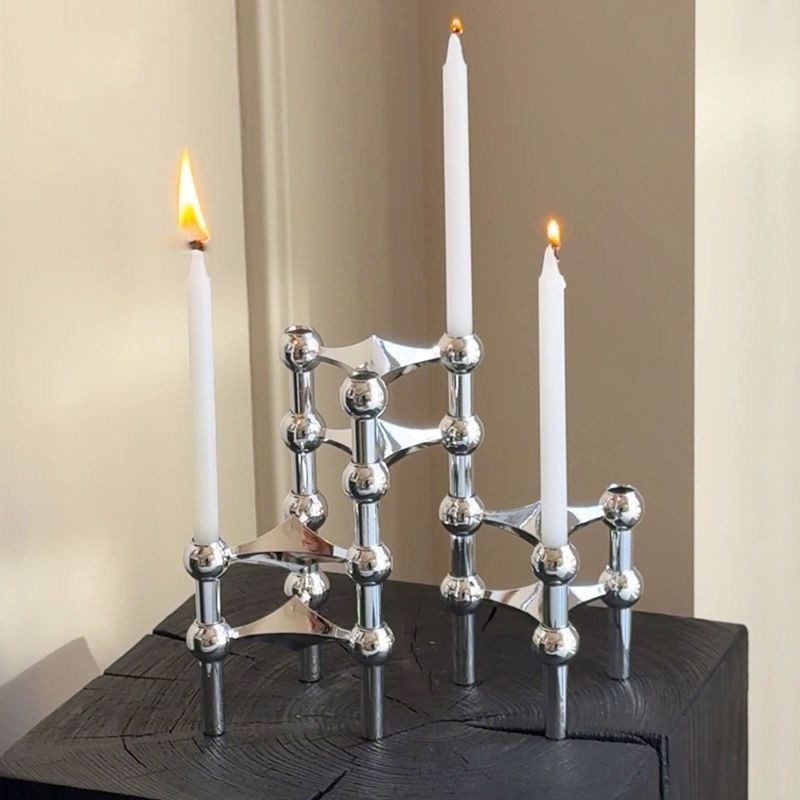
Candle holders are one of the easiest decor categories to sell and one of the hardest to buy well. Two suppliers can quote the same three-arm candelabra at the same FOB price, and only one of them will still look right after six months on a retail shelf. The difference is almost never the design — it is plating thickness, socket tolerance, base weight and how the carton was packed.
This guide covers what actually matters when you source candle holders wholesale from China: material trade-offs, which finishes reorder, realistic MOQ and lead times, and the six inspections worth paying for before you release the balance.
Quick answer
Buyers usually start by choosing a metal, then discover the format does not match the candle their customers actually burn. Work the other way round: the candle type dictates socket size, height and weight.
| Format | Candle it takes | Best material | Typical FOB |
|---|---|---|---|
| Taper candelabra | Taper, 2.0–2.2 cm base | Zinc alloy, brass | $4–12 |
| Pillar holder | Pillar 7–10 cm diameter | Iron, ceramic, wood | $2.5–7 |
| Tealight / votive cup | Tealight 3.8 cm | Glass, ceramic, iron | $0.6–2.5 |
| Modular / stackable | Taper | Zinc alloy | $4–9 per unit |
| Wall sconce | Taper or pillar | Iron, brass | $5–15 |
Die-cast zinc takes sharp detail, holds a mirror polish and electroplates evenly, which is why most gold and chrome sculptural candelabra are zinc. Unit weight of 0.3–0.6 kg is normal for a three-arm piece; anything noticeably lighter is usually a thinner casting that will dent and wobble. The main failure mode is plating pitting on inside corners where the bath could not reach.
Solid brass costs roughly two to three times zinc at the same size but develops a patina buyers pay for in hotel and high-end retail channels. Specify lacquered or unlacquered clearly: lacquer keeps the shine but can yellow, unlacquered patinates and needs re-polishing instructions on the packaging.
Welded iron is the cheapest way to get visual mass, and powder coating hides weld dressing. Check weld spatter under raking light and test the coating with a cross-hatch or a firm thumbnail — chipping at the base is the most common return reason on painted iron.
Reactive glazes give every piece a slightly different surface, which is a selling point online but a QC problem in bulk: you need an approved range, not a single golden sample. Breakage in transit is the real cost — budget 2% and insist on individual cell dividers rather than a shared carton cavity.
Moulded glass is inexpensive; hand-blown has visible variation and a higher price. Either way, ask whether the glass was annealed. Unannealed glass cracks when a candle burns down and heats one side of the holder — a safety complaint you cannot afford in the EU.
| Material | Finish options | MOQ | Main QC risk |
|---|---|---|---|
| Zinc alloy | Polished gold, chrome, matte, two-tone | 50–100 | Plating pitting, socket tolerance |
| Brass | Polished, brushed, antique, lacquered | 50–100 | Patina inconsistency |
| Iron / steel | Powder coat, plated | 100–200 | Weld spatter, paint chipping |
| Ceramic | Reactive glaze, matte, gloss | 100–300 | Glaze variation, transit breakage |
| Glass | Clear, tinted, mirrored | 200–500 | Annealing, chipped rim |
| Wood / MDF | Stained, painted | 100–200 | Moisture content, fire safety |
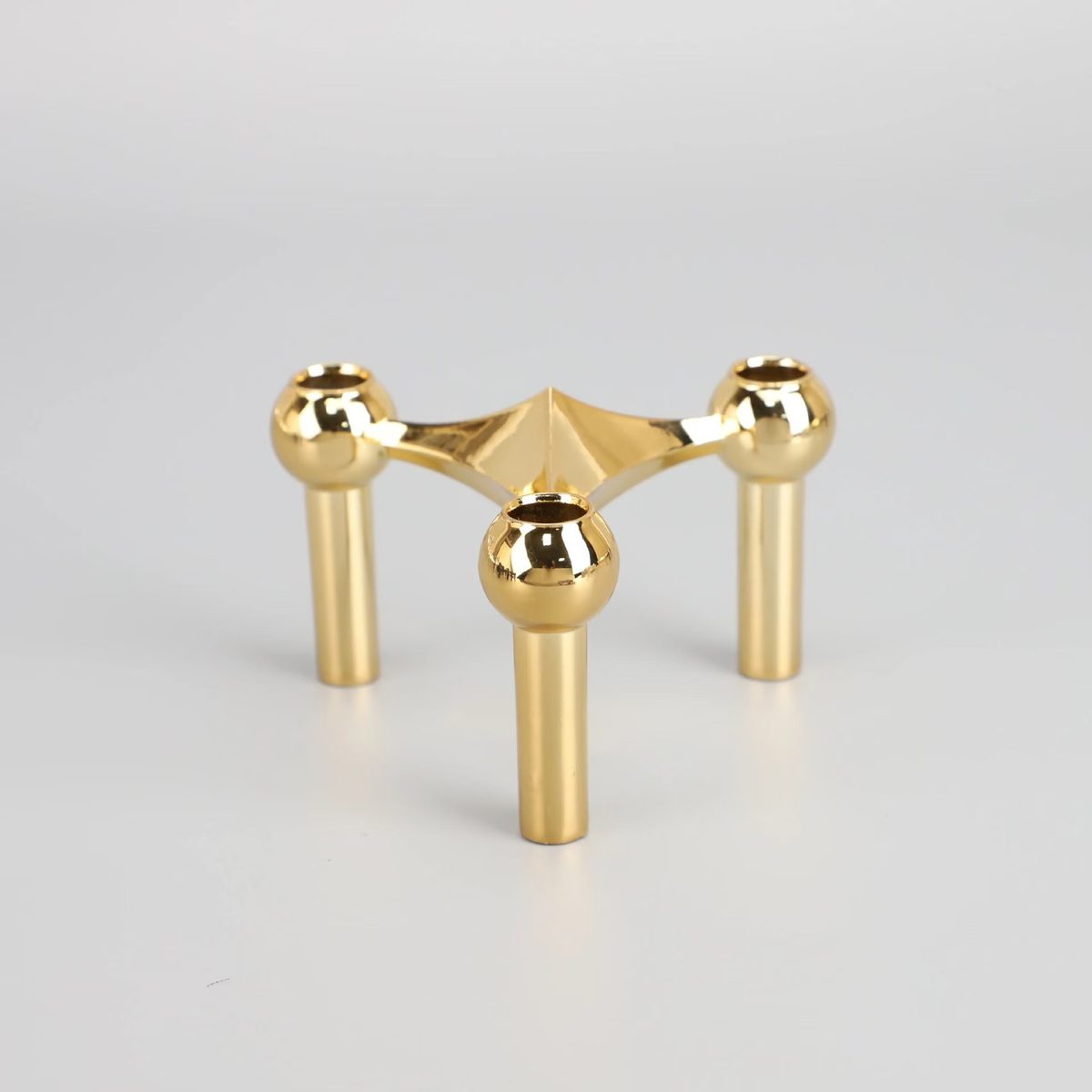
Across retail and hospitality accounts, four finishes do most of the volume: polished gold, polished chrome or nickel, matte black powder coat, and antique or brushed brass. Two-tone pieces — a matte black body with polished gold sockets — are strong second purchases because they let a retailer extend a display without duplicating what is already on the shelf.
Plating specification matters more than the colour name. Ask for the plating thickness in microns and a 24-hour neutral salt spray result. A well-plated zinc candelabra should show no white corrosion after 24 hours; if the factory cannot supply a test report, budget for a third-party test on the first shipment.
Colour drift between batches is the quiet killer of reorders. Keep a sealed golden sample at the factory and reference its batch number on every purchase order.
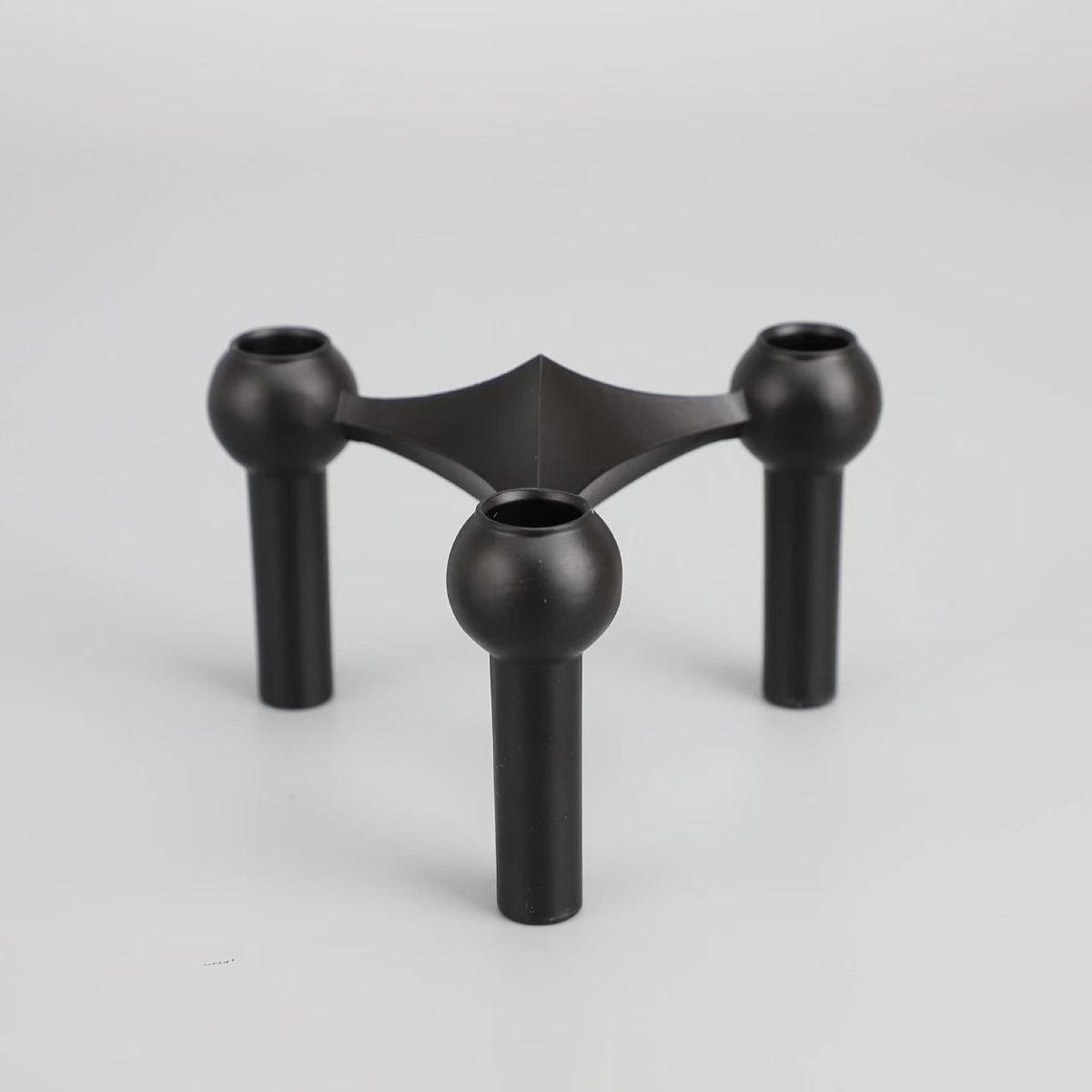
Candle holders are seasonal but not single-season: gold and chrome sell year-round, while black, amber and deep red spike from September to December. A workable first order for a mid-size retailer looks like this.
| Tier | Product type | Share of buy | Purpose |
|---|---|---|---|
| Entry | Single taper holder, tealight cup | 50% | Impulse and gift add-on |
| Core | Three-arm candelabra, pillar holder | 35% | Margin driver, tablescape anchor |
| Statement | Modular or oversized sculptural piece | 15% | Window display, press and social |
Colour split for a Northern Hemisphere Q4: roughly 40% gold or brass, 25% black, 20% chrome, 15% seasonal accent. If you sell into hospitality, shift 10 points from entry to core — hotels specify fewer but heavier pieces.
Booking a third-party inspection at 20–30% of production is cheaper than a single container of rejects. If the order value is under $5,000, ask the factory for video inspection against your checklist instead.
Metal candle holders are low-risk compared with children’s products, but the details still stop shipments: nickel release (EN 1811) if the surface is marketed for skin contact, lead and cadmium limits in coatings under REACH and CPSIA, and Prop 65 labelling for California. If you bundle candles, the candle itself needs safety labelling such as EN 15494. Packaging is increasingly a compliance item too — several EU markets now require recyclable or EPR-registered packaging, and uncoated FSC-certified cartons avoid a conversation at customs.
Most quotes come back incomparable because the brief was vague. Include the format, height and socket size, material and finish, quantity per colour, target FOB, packaging requirement, destination port and in-hands date. With those seven points, three suppliers will quote the same thing and you can compare on price and evidence rather than optimism.
Ready to price a candle holder programme?
Our stackable ball-joint candelabra is available in four finishes with MOQ 50 pcs per finish. Browse the lighting collection or request a quote with your quantity and colour list.
50–100 pieces per finish for die-cast zinc and brass, 100–300 for ceramic, and 200–500 for glass. Total order value usually needs to reach $3,000–5,000 for the factory to absorb setup costs.
Zinc alloy with electroplated gold is the standard for decorative candelabra: sharp detail, even plating, moderate cost. Solid brass is the premium option for hospitality and lasts longer under handling.
A three-arm zinc candelabra typically runs $4–12 FOB depending on size, casting weight and plating. Pieces above 0.8 kg or with hand-polished details sit at the top of that range.
Yes. Most factories allow a mixed carton at a fixed ratio, for example two gold to one black, as long as each finish meets its own MOQ. Confirm the ratio in writing on the purchase order.
Sea freight is 30–40 days port to port plus 5–7 days clearance and inland delivery. Add 30–40 days production, which is why Q4 stock has to be ordered in July or early August.
Ask for a 24-hour neutral salt spray report on the actual production plating, then run a cross-hatch tape test on a sample. If there is no report, book a third-party lab test on the first shipment.
